If you are planning to buy a heat pump water heater in 2026, you may have seen older articles advertising a federal tax credit worth up to $2,000. That incentive was real, but the rules have changed.
The federal Energy Efficient Home Improvement Credit under Section 25C no longer applies to qualifying property placed in service after December 31, 2025. However, some homeowners may still qualify for state-administered home energy rebates, utility incentives, or local programs that support high-efficiency water heaters.
The short answer: Do not include the former federal Section 25C tax credit in the budget for a heat pump water heater installed and placed in service in 2026. Instead, check active state, utility, and local incentives before purchasing equipment or scheduling installation.
This guide covers U.S. programs and reflects official guidance available as of October 2026. Rebate funding, program rules, and application windows can change, so confirm current eligibility with the agency administering the program.
What Happened to the Federal Heat Pump Water Heater Tax Credit?
The federal Energy Efficient Home Improvement Credit, also known as Section 25C, previously allowed eligible taxpayers to claim a credit for certain qualifying home energy improvements. Eligible heat pump water heaters could qualify for a credit of 30% of eligible project costs, up to a maximum of $2,000 per year, subject to the applicable requirements and limits.
That federal credit was accelerated to an earlier termination date under legislation enacted in 2025. The IRS now states that the credit is not allowed for qualifying property placed in service after December 31, 2025.
For a homeowner installing a new heat pump water heater in 2026, the practical implication is straightforward: the previous Section 25C credit is not available for the new installation simply because the equipment is energy-efficient or ENERGY STAR certified.
Official references:
Can You Still Claim the $2,000 Credit on Your 2025 Tax Return?
Potentially, if you completed an eligible installation in 2025 and meet the rules that applied to that tax year. This is different from installing a new water heater in 2026.
For a 2025 claim, review the applicable IRS instructions and make sure the equipment and installation met the requirements. For qualifying property placed in service in 2025, the rules included the requirement to report the applicable Qualified Manufacturer Identification Number (QMID) on the tax return.
Do not assume that paying for a water heater in 2025 automatically qualifies it for the credit. The applicable rules focus on the property’s installation or placed-in-service status, and the facts of a particular project can matter.
If your purchase, installation, and payment dates cross from 2025 into 2026, consult the IRS instructions for the relevant tax year or a qualified tax professional before claiming the credit.
What Incentives May Still Be Available in 2026?
Although the previous federal Section 25C tax credit has ended for new qualifying installations after the deadline, other incentives may still be available. They are not universal, and each has its own requirements.
| Incentive | Potential availability in 2026 | Where to verify |
|---|---|---|
| Federal Section 25C tax credit | Not available for qualifying property placed in service after December 31, 2025 | IRS |
| HEAR home electrification rebates | May be available in participating jurisdictions, subject to program status and eligibility | ENERGY STAR HEAR information |
| State energy rebates | Depends on the state, funding, approved equipment, and program rules | Official state energy office or rebate portal |
| Electric utility incentives | May be available for qualifying heat pump water heaters | Your utility’s official website |
| Local government programs | May be available in selected cities, counties, or municipal utility territories | Official local government or utility website |
| Manufacturer or retailer promotions | May be available as limited commercial offers | Offer terms from the manufacturer or retailer |
The key distinction is that a state or utility rebate is not the same as a federal tax credit. A program may be active in one state and unavailable in another, and an incentive can close when its allocated funding runs out.
1. HEAR Rebates: Could You Get Help Buying a Heat Pump Water Heater?
The Home Electrification and Appliance Rebates program, commonly called HEAR, was designed to help eligible households make qualifying electrification upgrades. It is administered through participating states, territories, and eligible Tribal entities rather than claimed as the former Section 25C federal tax credit.
Under the federal HEAR framework, the maximum rebate category for an eligible heat pump water heater is up to $1,750. ENERGY STAR identifies eligible heat pump water heaters as requiring ENERGY STAR certification under the program framework.
Important: The $1,750 figure is a maximum program amount, not a guaranteed payment to every homeowner. A participating jurisdiction may restrict which households, buildings, appliances, or projects qualify. The program may also be paused, closed to new applications, or operating under limited funding.
Who may qualify?
HEAR focuses on low- and moderate-income households. Under the general framework, eligible households are typically defined in relation to area median income (AMI), with program rules distinguishing households below 80% AMI and those between 80% and 150% AMI. State-specific requirements determine the actual rebate available.
Depending on the participating program, eligibility may also depend on:
- Household income and household size.
- Whether the property is an eligible residence or building type.
- Whether the appliance is an eligible first-time purchase or replacement.
- Whether the exact water heater model meets program criteria.
- Whether the work is completed through an approved contractor or distributor.
- Whether funding remains available and the application window is open.
Some HEAR programs apply the rebate as a point-of-sale discount through a participating contractor or distributor. That means the process may be different from buying a product first and requesting reimbursement afterward.
Start with these official resources:
- ENERGY STAR: Home Electrification and Appliance Rebates
- ENERGY STAR: State and Tribal rebate programs
2. State Rebates and Home Electrification Programs
State energy offices and designated program administrators may offer incentives for heat pump water heaters through HEAR or other state-specific initiatives. The availability and structure vary by location.
Some state programs may provide a direct rebate, a point-of-sale discount, income-qualified assistance, or support as part of a broader home energy upgrade. Others may not offer a water heater incentive at all.
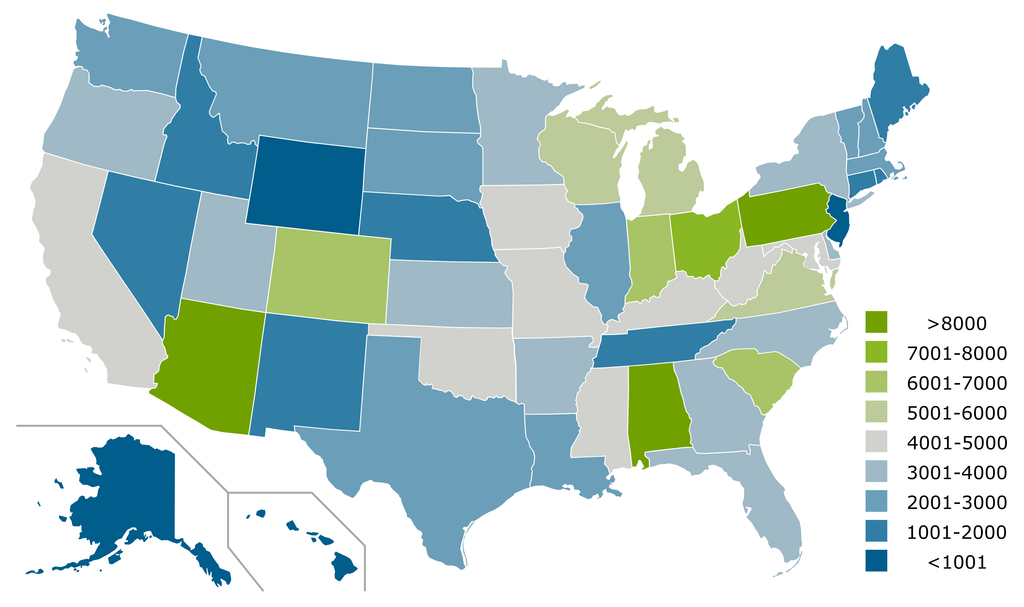
How to check your state
- Find your state’s official energy office or department.
- Search for “heat pump water heater rebate,” “Home Energy Rebates,” or “home electrification.”
- Check whether the program is accepting applications in 2026.
- Review income limits, eligible equipment, and building requirements.
- Confirm whether you must apply before buying the water heater.
- Ask whether the program requires a participating contractor or distributor.
Do not rely solely on a national maximum or an older article. A state may have changed its funding, eligibility criteria, application process, or eligible equipment list since the information was first published.
Heater Guide HQ is building state-specific guides to help homeowners investigate local programs. See our guides to Washington, Massachusetts, California, New York, and Colorado. Confirm that each article is published and that the URL matches its final permalink.
3. Utility Rebates: Check Your Electricity Provider
Your electric utility may offer an incentive for installing an eligible heat pump water heater, even when a federal tax credit is no longer available. These offers are typically tied to the utility’s service area and program terms.
Depending on the provider, the incentive might be:
- A fixed rebate after installation.
- An instant discount through a participating contractor.
- A point-of-sale discount from an approved retailer.
- An incentive limited to specific models or tank capacities.
To check your utility’s program, use its official website and search for “heat pump water heater rebate” or “energy efficiency incentives.” Confirm that your address is within the service territory, that the exact model qualifies, and that the offer is still funded.
Also ask whether you can combine the utility incentive with a state rebate. Some programs permit stacking, while others restrict combined assistance.
For a detailed process, read our companion article: How to Find Your Utility’s Water Heater Rebate, Step by Step. Verify the URL and publication status before relying on the link.
4. Which Heat Pump Water Heaters May Qualify for Rebates?
There is no single eligibility rule for every program. Many incentives specify ENERGY STAR certification, an approved equipment list, or other performance requirements. A brand name alone is not enough to confirm eligibility.
Before buying, collect the following information for the model you are considering:
- Manufacturer and full model number.
- ENERGY STAR certification status, if required.
- Tank capacity and relevant efficiency specifications.
- Installation address and utility provider.
- Whether the program applies to your household and building type.
- Whether the installation must be completed by a participating contractor.
If you are comparing products, see our guides to the best heat pump water heaters, heat pump water heater pros and cons, and heat pump water heater vs. tankless.
5. How Much Could You Save Without the Federal Tax Credit?
Your total savings may still include a utility rebate, a state incentive, or a qualifying local program. But the amount depends on which programs are available to you, whether they can be combined, and how much they actually cover.
Consider this illustrative example:
| Installed heat pump water heater cost | $3,800 |
| Hypothetical confirmed utility rebate | −$500 |
| Hypothetical confirmed state rebate | −$700 |
| Illustrative net cost | $2,600 |
|---|
These amounts are examples, not current offers or a prediction of what you will receive. The example excludes the former Section 25C credit because it is not available for qualifying property placed in service after December 31, 2025.
Before budgeting around a rebate, confirm the amount in writing, whether it is paid to you or deducted by the installer, and whether another incentive reduces the amount you can receive.
6. Can You Combine State and Utility Rebates in 2026?
Possibly. Whether two incentives can be combined depends on the specific program rules. Some allow eligible homeowners to receive both a utility rebate and state assistance; others limit the total incentive or prohibit certain combinations.
Ask each program administrator:
- Can this incentive be combined with another rebate?
- Is there a maximum combined amount?
- Does the program require disclosure of other incentives?
- Does one rebate reduce the eligible cost for another?
- Is preapproval required before ordering or installing the equipment?
- Will the rebate be paid to the homeowner or applied by the contractor?
Do not count two incentives in your budget until both administrators have confirmed that the combination is allowed.
7. Common Mistakes to Avoid
- Assuming the old $2,000 federal credit still applies. The Section 25C credit ended for qualifying property placed in service after December 31, 2025.
- Confusing a tax credit with a rebate. They have different rules and are not claimed in the same way.
- Buying before getting required approval. Some programs require preapproval or a participating installer.
- Choosing a model that is not eligible. Some programs require ENERGY STAR certification or a specific approved model listing.
- Using outdated information. A program may have closed or exhausted its funding.
- Assuming every state offers HEAR rebates. Availability and eligibility vary by participating jurisdiction.
- Expecting the maximum rebate automatically. The amount may be limited by household income, project cost, or local program rules.
- Failing to keep records. Retain invoices, model numbers, proof of installation, approval notices, and program correspondence.

8. Your 2026 Heat Pump Water Heater Incentive Checklist
Before committing to a new water heater, work through this checklist:
- Confirm that you are not relying on the expired Section 25C credit for a 2026 installation.
- Check your state’s official energy office and home energy rebate website.
- Check your electric utility’s current incentive list.
- Confirm the exact water heater model meets program requirements.
- Review household income, ownership, residence, and building eligibility rules.
- Ask whether preapproval or a participating contractor is required.
- Confirm whether rebates can be combined.
- Get a written quote showing the total installation price and any discount applied.
- Save all required documentation and submit applications by the deadline.
Official Sources
- Internal Revenue Service: Energy Efficient Home Improvement Credit
- IRS: FAQs on changes to federal energy credits
- ENERGY STAR: Heat Pump Water Heater Tax Credit — historical eligibility and credit limits through 2025.
- ENERGY STAR: Home Electrification and Appliance Rebates
- ENERGY STAR Rebate Finder — search for offers by ZIP code and product category.
Frequently Asked Questions
Is there still a $2,000 federal tax credit for heat pump water heaters in 2026?
No, not for qualifying property placed in service after December 31, 2025. The former Section 25C credit may still be relevant to eligible installations completed in 2025, subject to the rules for that tax year.
Can I claim the credit if I bought my water heater in 2025 but installed it in 2026?
Do not assume that you qualify based on the purchase date. The applicable rules and installation or placed-in-service timing matter. Review the IRS guidance for your circumstances or consult a qualified tax professional.
Are heat pump water heater rebates still available in 2026?
Some state, utility, and local programs may still offer incentives. Availability depends on your location, program status, household eligibility, equipment, and funding.
How much is the HEAR rebate for a heat pump water heater?
The HEAR framework lists up to $1,750 for an eligible heat pump water heater. That is a maximum category, not a guaranteed payment. The participating jurisdiction’s rules determine actual eligibility and rebate amounts.
Do I need to be a low-income household to get a rebate?
Not for every incentive. HEAR focuses on low- and moderate-income households, but some utility or state efficiency rebates may have different eligibility rules. Check each program separately.
Can I combine a utility rebate with a state rebate?
Sometimes. Ask both program administrators whether stacking is allowed and whether there is a maximum combined incentive.
Where can I find current rebates near me?
Start with the ENERGY STAR Rebate Finder, your utility’s official website, and your state’s energy office. Verify program availability directly before purchasing equipment.
Final Takeaway
The federal heat pump water heater tax credit that offered up to $2,000 under Section 25C is no longer available for qualifying property placed in service after December 31, 2025. Homeowners planning a 2026 installation should not rely on that former credit to calculate their project cost.
There may still be ways to reduce the upfront price through state-administered HEAR rebates, utility incentives, and local energy programs. The amount you can receive depends on where you live, which model you install, your household eligibility, and whether the program is open and funded.
Best next step: Check your state and utility programs before buying, confirm the exact model is eligible, and get the incentive terms in writing. For a broader overview of available programs, read Water Heater Rebates in 2026: Federal, State and Utility Programs.
Disclaimer: This article is for general informational purposes and is not tax, legal, or financial advice. Tax rules, rebates, and program funding may change. Verify current eligibility with the IRS or the official program administrator, and consult a qualified tax professional for individual tax questions.