If your water heater is leaking from the bottom, the cause could be a faulty drain valve, a leaking plumbing connection, a pressure relief problem, or corrosion inside the tank. Some leaks are easy to repair, but water coming from the tank itself usually means you need a replacement.
Start by identifying where the water is coming from. The steps below explain the most common causes, how to recognize the warning signs, and when to call a plumber.
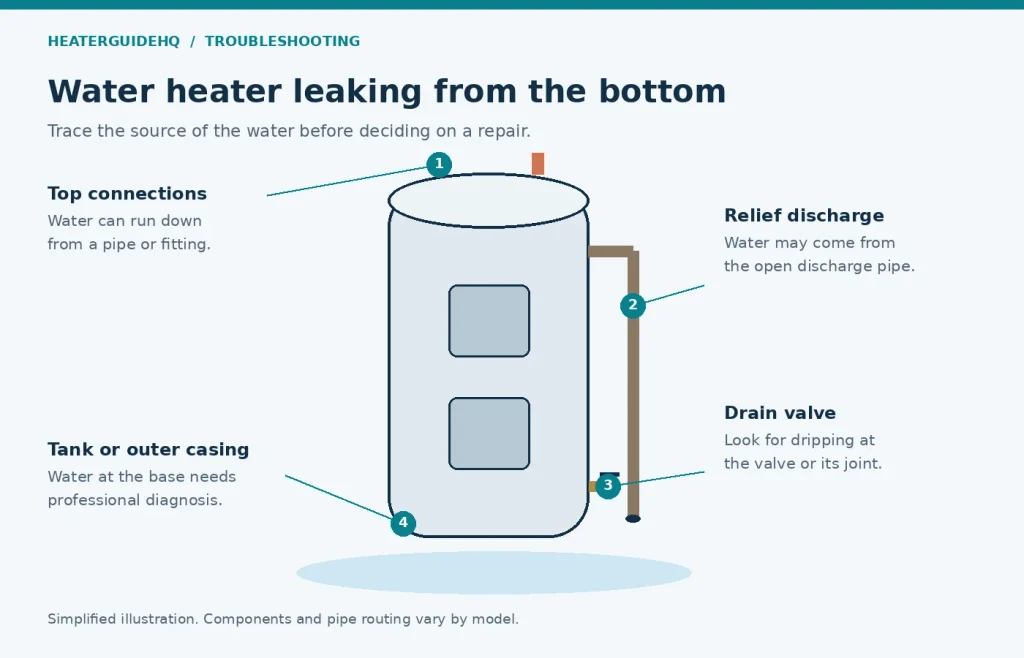
Water Heater Leaking From the Bottom: Quick Answer
- Water dripping from the drain valve: The valve may be loose, worn, or damaged. It may need cleaning or replacement.
- Water coming from a pipe or fitting: A plumbing connection may be leaking, even if the water collects at the bottom.
- Water flowing through the relief valve pipe: Excessive pressure, overheating, thermal expansion, or a faulty valve may be responsible.
- Water coming directly from the tank: Internal corrosion or a damaged tank is likely. Replace the water heater rather than attempting to seal it.
- A small puddle that disappears: Condensation may be responsible, especially after heavy hot-water use.
- Water leaking from an older heater: If the tank is corroded or the leak keeps returning, compare the cost of repair with replacement.
Safety First
Before inspecting a leaking water heater, protect yourself from hot water, electricity, and gas hazards.
- If water is near electrical components, do not touch the heater, wet wiring, or standing water. Shut off the power only from a safe, dry location.
- For an electric water heater, switch off the circuit breaker if you can do so safely. Never open an access panel while the unit is energized.
- If you smell gas, leave the building immediately. Do not operate switches or attempt to relight the pilot. Call your gas utility or emergency service from outside.
- If the leak is substantial, shut off the cold-water supply to the heater if the valve is safely accessible.
- Do not touch the temperature and pressure relief valve or remove it while the tank is hot or pressurized.
- If you suspect a tank failure, overheating, or a faulty safety device, stop using the heater and contact a qualified professional.
Water heaters can release scalding water and operate under pressure. Follow the manufacturer’s instructions and local plumbing and electrical codes.
How a Water Heater Can Leak From the Bottom
A traditional tank water heater stores hot water inside a metal tank. Several components can cause water to appear underneath the unit.
The drain valve is located near the bottom and is used to empty the tank during maintenance. The temperature and pressure relief valve releases water when the tank reaches unsafe temperature or pressure conditions. Plumbing connections carry water into and out of the heater.
The tank itself can also deteriorate over time. If internal corrosion creates a hole in the tank wall or bottom, water may escape even when the valves and external connections appear intact.
Identifying the source matters because replacing a faulty valve may solve a minor leak, while a leaking tank generally requires a new water heater.
1. The Drain Valve Is Leaking
The drain valve is one of the first places to inspect when water appears underneath a water heater.
This valve sits near the bottom of most traditional storage tanks. It allows water to drain during maintenance, flushing, or replacement.
Over time, the valve may wear out, develop a damaged seal, or become obstructed by sediment and mineral deposits.
Signs to look for:
- Water dripping directly from the drain valve.
- Moisture around the valve outlet or threaded connection.
- A puddle that gradually grows beneath the lower part of the heater.
- A leak that started after the tank was flushed or drained.
How to Fix a Leaking Drain Valve
First, observe the valve from a safe position to determine whether the water is coming from the valve outlet or the connection where it meets the tank.
If the valve has a removable cap, check whether it is fitted correctly. Do not force a stuck valve or attempt to remove it while the tank contains hot, pressurized water.
If the valve body or seal is damaged, replacement is generally the appropriate repair. A plumber can drain the tank safely and install a compatible valve.
If the valve is leaking because of sediment buildup, the plumber can also determine whether the tank needs maintenance.
Important: Do not assume that tightening the valve will solve the problem. Excessive force can damage the valve or tank connection.
2. The Temperature and Pressure Relief Valve Is Discharging Water
The temperature and pressure relief valve, commonly called the T&P valve, is a safety device designed to release water if the temperature or pressure inside the tank becomes dangerously high.
Although the valve is usually positioned higher on the heater, its discharge pipe may extend down toward the floor. This can make the water appear to be leaking from the bottom.
Signs to look for:
- Water dripping from the relief valve discharge pipe.
- A puddle appearing while the heater is heating water.
- Repeated water discharge even after the surrounding area has been dried.
- Water that appears near the bottom but can be traced to a pipe running down from above.
How to Fix a Leaking T&P Valve
Do not plug, cap, or block the discharge pipe. The valve must remain capable of releasing water when necessary.
A qualified plumber should determine whether the cause is excessive water pressure, thermal expansion, overheating, or a defective valve.
If the valve is faulty, replacing it may solve the leak. However, if the underlying problem involves excessive pressure or a malfunctioning thermostat, replacing the valve alone may not be enough.
If the valve repeatedly releases hot water or steam, stop using the heater and arrange professional service.
3. A Plumbing Connection Is Leaking
Water can escape from the inlet and outlet connections, flexible supply hoses, or nearby pipe fittings.
Because water naturally runs downward, a leak near the top of the heater can create a puddle at the base. This is why the location of the puddle does not always identify the source.
Signs to look for:
- Wet pipes or fittings above the tank.
- Water streaks running down the exterior.
- Mineral deposits or corrosion around a connection.
- Moisture that returns shortly after the area is dried.
How to Fix a Leaking Connection
Inspect the visible pipes and fittings without removing covers or touching hot components.
If you find moisture above the puddle, a plumber can check the connection and determine whether it needs a new seal, a replacement connector, or a more extensive repair.
Do not overtighten fittings, particularly if they are corroded. Applying excessive force can damage the connection and make the leak worse.
If the water appears to be coming from the tank rather than a fitting, further inspection is needed to rule out internal corrosion.
4. The Water Heater Tank Has Corroded
A leak caused by internal tank corrosion is one of the most serious possibilities.
Most traditional tank water heaters have protective linings and sacrificial anode rods that help reduce corrosion. However, these protections deteriorate over time.
Eventually, corrosion may damage the metal tank and create a hole through which water escapes.
Signs of a corroded tank include:
- Water emerging directly from the tank body or bottom seam.
- Rust or corrosion on the exterior.
- A persistent puddle that cannot be traced to a valve or pipe.
- Rust-coloured hot water.
- An older heater with a history of maintenance problems.
Can a Corroded Water Heater Tank Be Repaired?
If the tank itself has developed a leak, replacement is generally necessary.
Tape, epoxy, and external sealants are not reliable solutions for a pressure vessel containing hot water. Even if a temporary patch appears to stop the water, it does not restore the tank’s structural integrity.
A plumber can confirm whether the tank has failed and recommend a suitable replacement.
If your heater is relatively old, this may also be a good opportunity to compare the operating costs, capacity, and warranty of different models.
5. Condensation Is Collecting Under the Heater
Not every puddle is caused by a failed component. Condensation can form when humid air meets a cold surface.
This may occur when cold water enters the tank, particularly after a large amount of hot water has been used or when the surrounding area is humid.
Signs of condensation include:
- A light layer of moisture on the tank or nearby pipes.
- Small amounts of water that disappear as the heater warms up.
- Moisture that appears after heavy hot-water use.
- No visible dripping from a valve, pipe, or tank seam.
How to Check for Condensation
If the area is safe and dry enough to approach, observe whether the moisture disappears and whether it returns.
If a small amount of moisture disappears as the heater warms, condensation may be responsible. However, this is not enough to rule out a leak.
If water continues to accumulate, the puddle grows, or the source remains unclear, arrange a professional inspection.
6. Sediment Buildup Is Contributing to the Problem
Mineral deposits and sediment can accumulate inside a storage water heater, particularly in areas with hard water.
Sediment buildup does not automatically mean the tank is leaking, but it can contribute to poor heating performance, unusual noises, and increased wear on some components.
Signs of sediment buildup include:
- Rumbling or popping noises during heating.
- Slower heating or reduced hot-water availability.
- A drain valve that becomes clogged or difficult to operate.
- A heater that has not received the maintenance recommended by its manufacturer.
How to Fix Sediment Buildup
Check the manufacturer’s maintenance instructions to determine whether tank flushing is recommended for your model.
A qualified professional can flush the tank safely, inspect the drain valve, and check whether corrosion or other damage is present.
If the drain valve is blocked or the tank is already leaking, do not force the valve open or attempt an aggressive flush. A damaged valve or corroded tank can worsen the situation.
If your water heater is also producing insufficient hot water, read our guide to Electric Water Heater Not Heating: 7 Causes and Fixes.
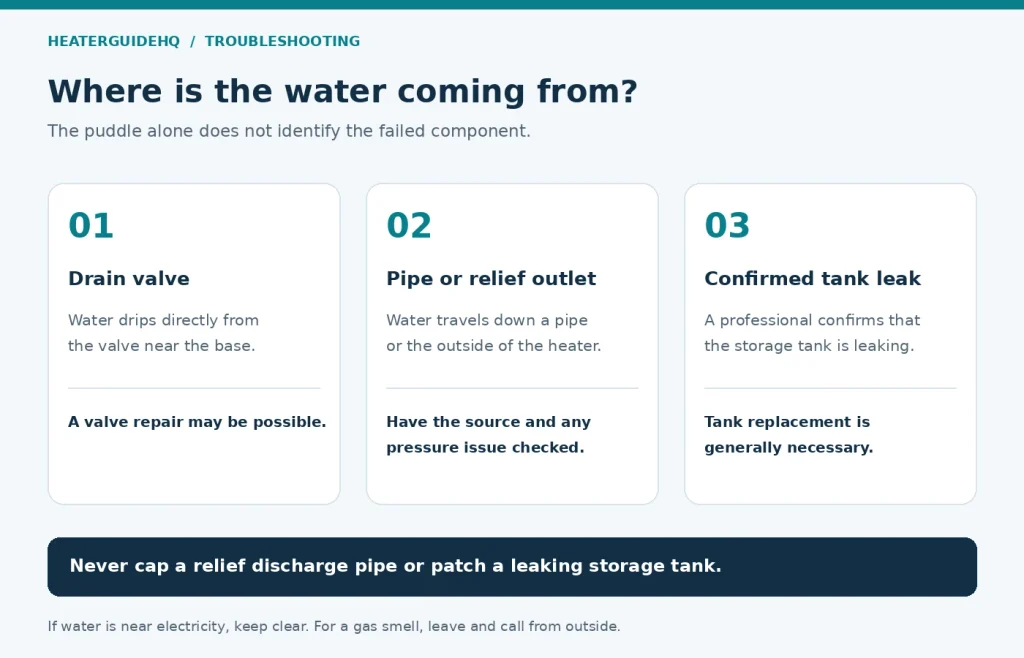
Water Heater Leaking From the Bottom: Quick Diagnosis
Use the symptoms below to narrow down the possible cause before arranging a repair.
- Water dripping from the drain valve: The valve or its seal may be worn or damaged.
- Water coming from a pipe above the puddle: A plumbing connection may be leaking.
- Water flowing through a discharge pipe: The T&P valve may be responding to pressure or temperature conditions, or the valve may be faulty.
- Water emerging from the tank shell: Internal corrosion or tank failure is likely.
- A small amount of moisture that disappears: Condensation may be responsible.
- Water leaking alongside rumbling noises or poor heating: Sediment buildup or another maintenance issue may be contributing, but the actual leak source still needs to be identified.
- A leak that returns after a repair: The original cause may not have been fully addressed, or another component may be failing.
Do not use this diagnosis as a substitute for a professional inspection when the source is uncertain or the leak is substantial.
When to Call a Professional
Some water heater leaks require immediate attention. Contact a qualified plumber or technician if:
- Water appears to be coming directly from the tank.
- The leak is substantial or continues after the water supply is shut off.
- The temperature and pressure relief valve repeatedly discharges water.
- You notice significant rust, corrosion, or deterioration.
- The heater is leaking near electrical components.
- You suspect overheating, excessive pressure, or a damaged safety device.
- The source of the leak is unclear.
- You are uncomfortable performing the necessary checks.
If you smell gas, leave the building and contact the gas utility or emergency service from outside. Do not attempt to diagnose or repair a suspected gas leak yourself.
What Does It Cost to Fix a Leaking Water Heater?
The cost depends on the cause of the leak, the type of heater, the replacement parts, and local labour rates.
The following are broad estimates for the US market in 2026, not guaranteed quotes.
| Repair or replacement | Estimated cost |
|---|---|
| Minor valve or plumbing repair | $100–$300 |
| Drain valve replacement | $150–$350 |
| T&P valve replacement | $150–$350 |
| Standard tank water heater replacement | $900–$2,500 installed |
Actual costs can fall outside these ranges depending on access, emergency service, the heater model, local labour rates, and any plumbing or code upgrades required.
A plumber should identify the source before quoting the repair. If the tank itself is leaking, spending money on external sealants or unrelated replacement parts will not provide a reliable solution.
Repair or Replace?
Deciding whether to repair or replace your water heater depends primarily on the source of the leak, the age of the unit, and the cost of the repair.
Consider these points before making a decision:
- Replace the heater if the tank shell is leaking. Internal corrosion generally cannot be repaired reliably.
- Repair the heater if the problem is an isolated valve or connection. This may be the more economical choice when the tank is otherwise in good condition.
- Consider the age of the unit. Many conventional tank water heaters last around 10–15 years, although lifespan varies with maintenance, water quality, installation, and model.
- Compare repair costs with replacement costs. If a major repair approaches half the cost of a new unit, replacement may be worth considering.
- Check the warranty. Some tanks or components may still be covered, depending on the manufacturer’s terms.
A relatively new heater with a leaking drain valve may only need a straightforward repair. An older heater with a corroded tank is usually a stronger candidate for replacement.
If your gas water heater has other problems as well, such as a pilot light that repeatedly goes out, read our guide to Gas Water Heater Pilot Light Won’t Stay Lit: Step-by-Step Fix.
Frequently Asked Questions
Why is my water heater leaking from the bottom?
The most common possibilities include a faulty drain valve, a leaking plumbing connection, water discharged through the T&P valve pipe, condensation, or internal tank corrosion. Identifying the exact source is essential because the correct repair depends on the cause.
Can I use a water heater that is leaking from the bottom?
It is best to stop using the heater until the leak has been assessed, particularly if water is accumulating, the source is unknown, or the leak involves a safety component. Shut off the water supply and power only if you can do so safely, and contact a qualified professional.
Does a leaking water heater always need to be replaced?
No. A faulty valve or leaking plumbing connection may be repairable. However, if the tank itself has corroded or developed a hole, replacing the unit is generally necessary.
Can I fix a leaking water heater with tape or epoxy?
Tape and epoxy are not reliable repairs for a leaking storage tank. The tank contains hot water under pressure, and a patch cannot restore its structural integrity. If the tank is leaking, arrange a replacement assessment.
Why is my water heater leaking only when it heats up?
Heating can cause water to expand, which may contribute to pressure-related discharge. A faulty relief valve, excessive water pressure, thermal expansion, or a leak that becomes more noticeable during operation may also be responsible. A plumber can determine which condition applies.
Is a leaking water heater dangerous?
It can be. A leak may cause property damage, and water near electrical equipment can create an electrical hazard. Gas water heaters also require special precautions if there is a gas smell or a suspected combustion problem. Treat persistent leaks seriously and seek professional assistance when necessary.
How long does a water heater usually last?
Many conventional tank water heaters last approximately 10–15 years, but some fail earlier and others last longer. Maintenance, water quality, installation, usage, and the specific model all influence lifespan.
Should I replace my water heater if it is more than 10 years old?
Not necessarily. Age alone does not mean the unit needs immediate replacement. However, if an older heater has a significant leak, visible corrosion, or repeated repair needs, comparing replacement costs may be worthwhile.
Final Thoughts
A water heater leaking from the bottom can indicate anything from a worn drain valve to serious internal tank corrosion. The most important step is to identify the source of the water before deciding whether a repair or replacement is necessary.
If the leak comes from an accessible valve or plumbing connection, a targeted repair may be enough. If water is escaping through the tank itself, replacement is generally the safest long-term option.
Do not ignore a persistent leak. Acting early can help limit water damage, avoid unnecessary repair costs, and keep your hot-water system operating safely.
Related Guides
If you are troubleshooting other water heater problems, these guides may also help:
- Gas Water Heater Pilot Light Won’t Stay Lit: Step-by-Step Fix
- Electric Water Heater Not Heating: 7 Causes and Fixes
This guide provides general information only. Water heater designs and local plumbing, electrical, and gas codes vary. Always follow the manufacturer’s instructions and consult a qualified professional when necessary.