If the status light on your water heater is blinking, the pattern may be telling you whether the unit is operating normally or has detected a problem. On many gas water heaters, the light flashes in a repeating sequence. Some electric models use different colors or electronic diagnostic indicators.
The important thing to know is that blinking light codes are not universal. A two-flash code on one model may mean something different on another. Before replacing parts or resetting the heater, identify the model and compare the pattern with the owner’s manual or manufacturer’s troubleshooting guide.
Quick Answer: What Does a Blinking Water Heater Light Mean?
- One flash at regular intervals: On some gas models, this indicates normal standby operation.
- Several flashes followed by a pause: This may indicate a fault such as a weak pilot signal, ignition issue, sensor problem, pressure-switch fault, or overheating.
- No light: The pilot may be out, power may be missing, or the control may not be operating. The correct explanation depends on the model.
- A steady light or a different color: This can indicate a particular operating state or fault on some controls.
Count the flashes between pauses, note the light color, and check the model-specific manual. Do not rely on a generic code chart alone.
Safety First: Before Troubleshooting
- If you smell gas, leave the building. Do not operate switches or attempt to relight the pilot. Call the gas utility or emergency service from a safe location.
- For an electric water heater, never touch wet electrical components. Turn off power at the breaker only if you can do so safely.
- Do not bypass safety switches, defeat a flame sensor, or repeatedly reset a control that keeps faulting.
- Do not remove sealed combustion covers or work on gas valves, burners, wiring, or venting unless you are qualified to do so.
How to Read a Water Heater Status Light
- Find the model number. Check the rating plate on the heater and write down the complete model number.
- Observe the full sequence. Watch for at least one complete cycle. Count the flashes before the longer pause.
- Record the color and timing. A short flash, a long flash, a steady light, or alternating colors may have different meanings.
- Check the correct manual. Use the documentation for your exact model and gas-control or electronic-control type.
- Note other symptoms. Record whether the heater has no hot water, shuts down, makes unusual noises, or shows a leak.
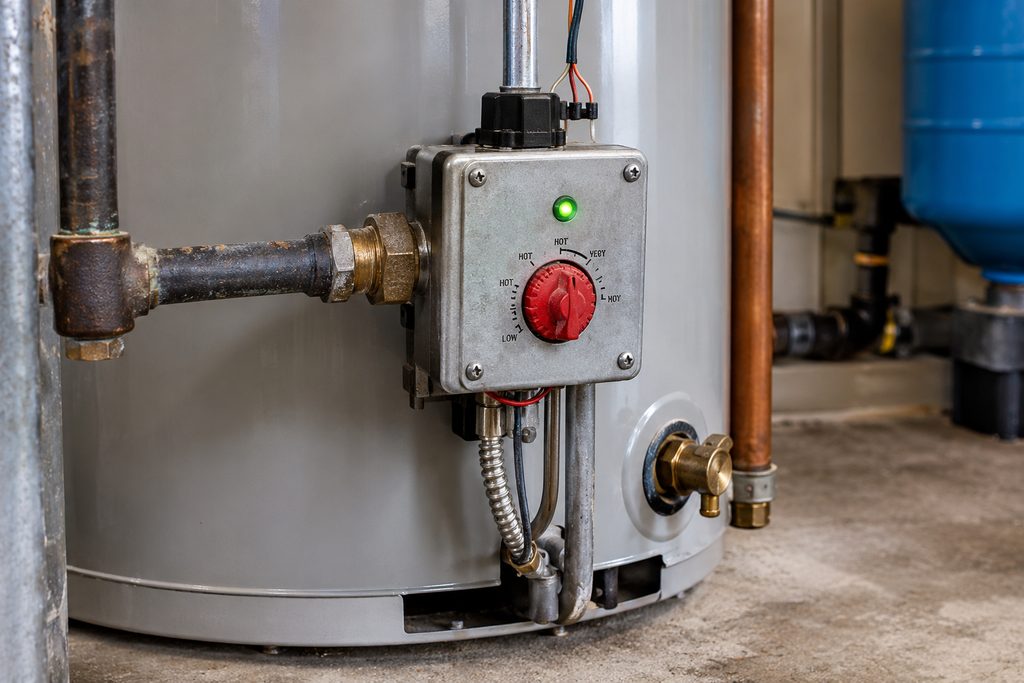
Rheem Water Heater Blinking Light Codes
Rheem sells multiple water heater families, including gas, electric, tankless, and hybrid models. Their diagnostic systems are not all the same. Depending on the model, troubleshooting information may be shown by a status LED, a digital display, or a controller.
What the blinking light may indicate
- Normal status indication: Some models use a repeating light to show that the control is powered or in standby.
- Ignition or pilot problem: On applicable gas models, a fault may relate to pilot ignition, flame sensing, or gas supply.
- Temperature or sensor fault: Electronic controls may report a sensor, limit, or overheating issue.
- Control or communication fault: Some models can indicate an electronic-control or communication problem.
These are categories, not a universal Rheem flash-code list. Do not assume a specific number of flashes has the same meaning across every Rheem product. Locate the model-specific troubleshooting chart before taking action.
Next step: Use Rheem’s official support resources or the manual supplied with the unit. If the heater displays a fault that returns after the manual’s permitted checks, contact a qualified service technician.
A. O. Smith Water Heater Blinking Light Codes
A. O. Smith gas water heaters may use a status light on the gas control to communicate operating conditions. The manufacturer’s guidance explains that the timing and number of flashes must be read according to the specific model. For example, its support instructions identify one flash every three seconds as normal operation on certain gas controls, while other patterns require further diagnosis.
Examples from A. O. Smith gas-control guidance
- One flash every three seconds: On the models covered by the manufacturer’s guide, this indicates the pilot is lit and the gas control is operating properly. The tank may still need time to heat the water.
- No status light: The pilot may not be lit, the thermopile may not have reached operating temperature, or the control may not be receiving the expected signal. Follow the exact model’s lighting and troubleshooting instructions.
- Other repeated flash patterns: These may indicate pilot-signal, temperature, or control-related faults, depending on the installed gas valve and model.
Do not use these examples as a complete code chart for every A. O. Smith water heater. Some models use different controls and codes. Follow the instructions printed on the heater and the official model-specific support guide.
If the pilot will not stay lit, see our related guide: Gas Water Heater Pilot Light Won’t Stay Lit.
Bradford White Water Heater Blinking Light Codes
Bradford White water heaters also use different controls across product families. Some gas models use a green LED on the gas control, while certain electric models and accessory modules use different colors and diagnostic sequences.
Examples from Bradford White manuals
- One flash followed by a pause: On some gas-control models, this indicates standby or that the thermostat is satisfied, rather than a fault.
- Two or three flashes: Depending on the control, these can be associated with a weak pilot signal, a pressure-switch issue, or another condition. The exact manual is essential.
- Four flashes: Certain models use this pattern for excessive tank temperature or a temperature-related fault.
- Five or more flashes: On some models, higher-count patterns may indicate sensor, gas-control, ignition, or other faults. The meanings differ by control type.
These examples are not universal across Bradford White products. Some controls use combinations such as six flashes followed by one additional flash, or different light colors. Count the full pattern and consult the exact service or owner’s manual.
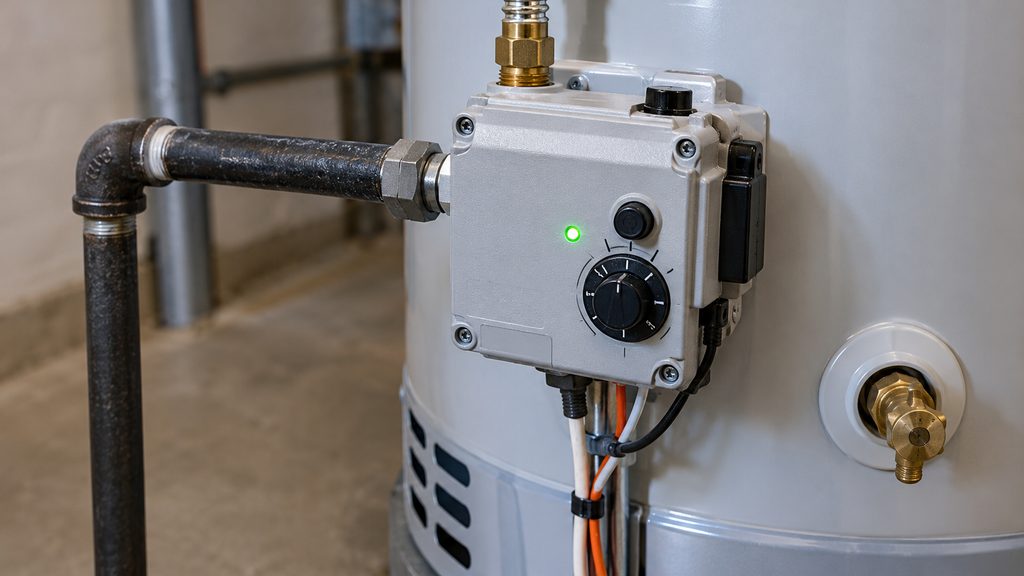
Bradford White advises owners to use the model or serial number to locate the relevant technical documentation. If a code persists or the instructions call for component testing, contact a plumbing professional.
What to Check When the Light Is Blinking
Once you have recorded the code, limit your initial checks to safe observations and the steps explicitly permitted by the owner’s manual.
- Check the fuel or power supply: Only inspect accessible controls. Do not work on gas piping or electrical wiring.
- Look for obvious airflow or venting obstructions: Do not dismantle venting or sealed combustion components. A venting fault needs prompt professional attention.
- Check the temperature setting: Confirm it has not been accidentally changed, following the manufacturer’s instructions.
- Look for leaks or water near controls: If water has reached electrical or gas-control components, stop and seek professional service.
- Reset only when instructed: Repeated resets can hide a recurring fault and may be unsafe.
If your electric unit is blinking and also producing no hot water, our guide to Electric Water Heater Not Heating may help you identify the next safe step.
When to Call a Professional
Call a qualified technician if the code indicates overheating, a combustion or venting issue, a gas-control fault, an electrical problem, or a sensor fault that requires testing. You should also arrange service if the light continues to show the same error after you have completed the manual’s safe checks.
Do not bypass a limit switch, pressure switch, flame sensor, or other safety component. If the heater is leaking, read our guide to Water Heater Leaking From the Bottom: Causes, Fixes and When to Replace if that URL is the published address of your article.
Frequently Asked Questions
Does a blinking water heater light always mean there is a problem?
No. Some models blink during normal standby or operation. The flash count, timing, color, and model determine whether the signal indicates normal operation or a fault.
Why is my water heater light blinking but I have no hot water?
The unit may have an ignition, pilot, sensor, limit, power, or control issue. Record the pattern and consult the model-specific manual. If the guide does not identify a safe owner-level check, contact a technician.
Can I reset my water heater to clear the blinking code?
Only reset the heater if the manufacturer’s instructions specifically recommend it for your model and code. If the fault returns, do not keep resetting the unit; arrange service.
Are Rheem, A. O. Smith, and Bradford White flash codes the same?
No. Codes vary by manufacturer, model, fuel type, and installed control system. Even two models from the same brand may use different patterns.
Where can I find the correct water heater code chart?
Use the owner’s manual or service documentation for the complete model number and control type. Manufacturer support pages can help you locate the correct document.
Related Guides
- Gas Water Heater Pilot Light Won’t Stay Lit
- Electric Water Heater Not Heating
- Water Heater Leaking From the Bottom
Disclaimer: This article provides general information, not model-specific repair instructions. Diagnostic codes and procedures vary. Always follow the manual for your exact water heater and use a qualified professional for gas, electrical, combustion, or safety-control repairs.
Manufacturer References
- A. O. Smith: Pilot Lights and Status Light Flashes
- Bradford White: Finding Your Water Heater Manual
- Bradford White: Frequently Asked Questions, including status-light guidance
- A. O. Smith: Water Heater Support
For Rheem, locate the documentation through the support section of the official Rheem website using the complete model number.