Your water heater is one of the biggest energy users in many homes, but how much does it actually add to your monthly utility bill? The answer depends on whether you have a conventional electric tank, a gas water heater, a tankless system, or a heat pump water heater.
For many U.S. households, water-heating energy costs can range from around $10 to $80 or more per month. Heat pump water heaters are often among the least expensive to operate, while conventional electric models can cost more when electricity rates or hot water demand are high. These figures are broad estimates, not guaranteed bills.
In this guide, we’ll compare monthly and annual running costs, explain how to estimate your own expenses, and share practical ways to reduce your water-heating bill.
How Much Does It Cost to Run a Water Heater Per Month?
The following table provides rough planning estimates for common residential water heater types in the United States. Your actual cost may fall outside these ranges depending on energy prices, household size, climate, equipment efficiency, and hot water usage.
| Water Heater Type | Estimated Monthly Cost | Estimated Annual Cost |
|---|---|---|
| Conventional electric tank | $40–$75 | $480–$900 |
| Natural gas tank | $20–$45 | $240–$540 |
| Gas tankless | $15–$40 | $180–$480 |
| Electric tankless | $35–$80+ | $420–$960+ |
| Heat pump (hybrid) water heater | $10–$30 | $120–$360 |
Important: These are illustrative budgeting ranges rather than official national averages or quotes for specific models. They assume typical residential use and exclude installation, repairs, financing, and most maintenance expenses. Electricity and gas prices vary significantly by location. A household with frequent long showers, a large family, or cold incoming water may pay more.
What Determines Your Water Heater’s Monthly Cost?
Several factors affect how much you pay to heat water each month. Understanding them makes it easier to identify potential savings.
1. Your Energy Source
Electricity, natural gas, propane, and other fuels have different prices and heating characteristics. A gas water heater may cost less to operate than a conventional electric model in some areas, but that is not guaranteed. Local utility rates and the efficiency of each unit matter.
Heat pump water heaters use electricity to move heat from the surrounding air into the water. Because they transfer heat rather than generating all of it through electric resistance, they can use substantially less electricity under suitable operating conditions.
Read our guide to gas vs. electric water heaters for a closer comparison of energy costs, efficiency, and installation considerations.
2. Household Size and Hot Water Usage
The more hot water your household uses, the more energy your water heater needs. Long showers, frequent laundry loads, dishwashing, and multiple bathrooms can increase consumption.
A household of one or two people may spend considerably less than a household of five, even if both use similar equipment. Usage habits can matter as much as tank capacity.
3. Your Local Utility Rates
Electricity prices vary widely across the United States. As one reference point, the average U.S. residential electricity rate was approximately 18.3 cents per kilowatt-hour in July 2026. Your utility bill may show a significantly different rate, especially after delivery charges and other fees are considered.
For the most accurate estimate, use your actual electricity price per kWh and your natural gas price per therm, if applicable. You can review electricity price data from the U.S. Energy Information Administration.
4. Water Temperature and Incoming Water Temperature
Your water heater must raise incoming cold water to the temperature needed for household use. If the incoming water is colder in winter, the heater generally needs more energy to reach the same target temperature.
Setting the thermostat higher than necessary can also increase energy consumption and the risk of scalding. Follow the manufacturer’s instructions and applicable safety guidance when adjusting the temperature.
5. Equipment Efficiency and Standby Heat Loss
A storage tank loses some heat while hot water sits inside it. The unit must periodically use energy to maintain the set temperature, even when nobody is using hot water. This is known as standby heat loss.
Insulation, equipment design, maintenance, and efficiency ratings affect the amount of energy used. When comparing models, check the Uniform Energy Factor (UEF) and the estimated annual energy cost on the product’s EnergyGuide label.
Monthly Operating Cost by Water Heater Type
Conventional Electric Tank Water Heater
A standard electric tank uses resistance heating elements to heat stored water. These systems are common and generally straightforward to install, but operating costs can be relatively high in areas with expensive electricity.
- Estimated monthly cost: $40–$75.
- Estimated annual cost: $480–$900.
- Best suited for: Homes with an existing electric connection and moderate hot water needs.
A larger tank does not automatically mean a much higher bill. The amount of hot water used, the incoming water temperature, and the unit’s efficiency are important factors. However, an oversized or poorly insulated system may waste energy.
Natural Gas Tank Water Heater
A gas tank water heater burns natural gas to heat water stored in an insulated tank. Depending on local gas and electricity rates, it may cost less to operate than a conventional electric tank.
- Estimated monthly cost: $20–$45.
- Estimated annual cost: $240–$540.
- Best suited for: Homes with a suitable natural gas connection and properly installed venting.
Remember that gas water heaters can also use a small amount of electricity for controls, ignition, or other components. Venting, combustion air, and carbon monoxide safety must be handled correctly.
Gas Tankless Water Heater
A gas tankless water heater heats water as it flows through the unit instead of storing a full tank of hot water. It avoids much of the standby heat loss associated with conventional storage tanks, although actual savings depend on usage and model efficiency.
- Estimated monthly cost: $15–$40.
- Estimated annual cost: $180–$480.
- Best suited for: Homes that want on-demand hot water and have the gas supply, venting, and flow capacity required by the unit.
Tankless models can have higher upfront installation costs. A unit that is undersized for simultaneous showers and other hot water uses may not meet your needs, even if its operating costs look attractive.
Compare the advantages and disadvantages in our guide to tank vs. tankless water heaters.
Electric Tankless Water Heater
Electric tankless models heat water on demand, but many require substantial electrical power to deliver a high flow rate. Their operating costs depend on the amount of water heated and the local electricity rate.
- Estimated monthly cost: $35–$80 or more.
- Estimated annual cost: $420–$960 or more.
- Best suited for: Homes where the electrical service can support the model and the required hot water flow.
Do not assume an electric tankless unit automatically costs less to operate than a tank-style electric heater. Both ultimately rely on electricity to heat water, and the total energy needed depends heavily on usage and system efficiency.
Heat Pump (Hybrid) Water Heater
A heat pump water heater draws heat from the surrounding air and transfers it to the water. Many models also include conventional electric resistance elements for periods of high demand or certain operating conditions.
- Estimated monthly cost: $10–$30.
- Estimated annual cost: $120–$360.
- Best suited for: Homes with an appropriate installation space, sufficient airflow, and a suitable climate or indoor environment.
Heat pump water heaters can substantially reduce electricity use compared with conventional electric resistance tanks. Actual savings depend on the model, room temperature, operating mode, hot water demand, and local electricity prices.
Explore our guide to the best heat pump water heaters of 2026 to learn more about hybrid models and their features.
How to Calculate Your Water Heater’s Monthly Cost
You can estimate your running cost with a simple calculation if you know how much energy your unit uses and what your utility charges.
For an Electric Water Heater
Use this formula:
Monthly cost = Monthly electricity use (kWh) × Electricity rate ($/kWh)
For example, if your water heater uses 300 kWh in a month and your electricity rate is $0.183 per kWh:
300 × $0.183 = $54.90 per month.
This is an illustrative calculation, not a claim that every electric water heater uses 300 kWh per month. Check the unit’s EnergyGuide label, use a suitable energy monitor if appropriate, or estimate consumption from your household’s actual usage.
For a Natural Gas Water Heater
If your bill lists natural gas in therms, use this formula:
Monthly gas cost = Therms used by the water heater × Cost per therm
For example, if the water heater uses 20 therms in a month and gas costs $1.50 per therm, the estimated fuel cost is:
20 × $1.50 = $30 per month.
This example covers the gas used by the water heater only. If your furnace, stove, or other appliances share the same gas meter, your utility bill will not normally separate water-heating use automatically. You may need a model-based estimate or a suitable measurement method.
How to Estimate Annual Cost from the EnergyGuide Label
Many water heaters display estimated annual energy use or operating cost based on standardized testing assumptions. If the label lists an estimated annual cost, divide that figure by 12 to get a rough monthly comparison.
For example, an estimated annual operating cost of $600 equals approximately $50 per month. Your actual costs may differ because the label uses standardized assumptions rather than your household’s exact usage and utility rates.
The U.S. Department of Energy’s water heater test procedures explain how estimated operating costs are calculated using energy consumption and representative fuel prices. See the federal water heater test procedures.
What Makes Your Water Heater Bill Go Up?
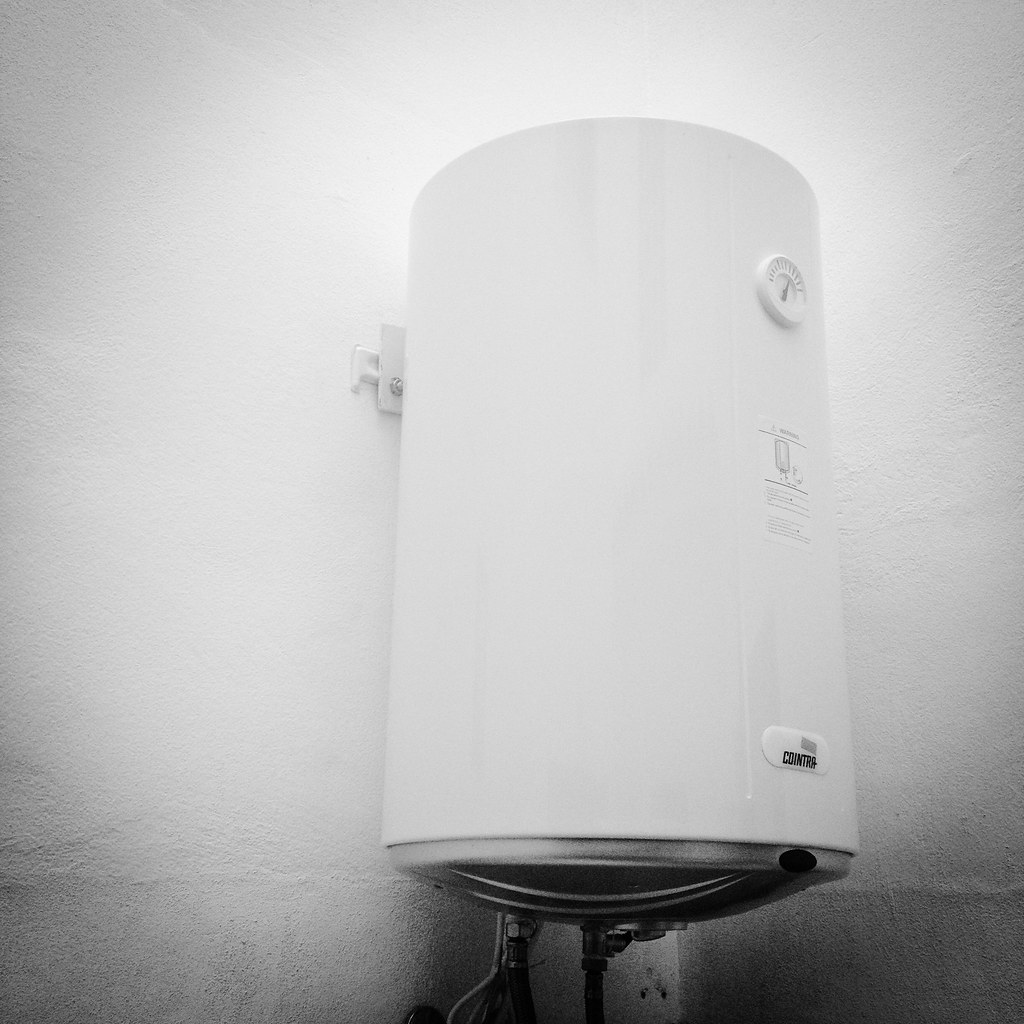
If your water-heating costs suddenly increase, investigate these possible causes before assuming the unit needs to be replaced.
- Higher hot water demand: More occupants, longer showers, or extra laundry can increase consumption.
- Seasonal changes: Colder incoming water means more energy is needed to heat the same volume.
- Utility rate increases: A higher price per kWh or therm raises your bill even if usage stays the same.
- Excessive thermostat settings: A temperature setting that is higher than necessary can increase energy use and scalding risk.
- Leaks or dripping hot water fixtures: Hot water escaping from a pipe or faucet may force the heater to replenish and reheat water.
- Equipment problems: Sediment, failing components, poor insulation, or other faults can affect performance.
- Incorrect sizing: A system that cannot meet your household’s needs may be operated in a less efficient mode or struggle during peak demand.
If you notice unusual sounds, read our guide to why a water heater makes noise. If you see moisture around the unit, our article on water heaters leaking from the top explains common causes and when to seek professional help.
7 Ways to Lower Your Water Heater’s Monthly Cost
1. Reduce Unnecessary Hot Water Use
Shorter showers, fixing dripping hot water faucets, and using efficient showerheads can reduce the amount of water that needs heating. These changes can help regardless of the type of water heater you own.
2. Choose a Sensible Temperature Setting
Follow the manufacturer’s recommendations and public health guidance when setting the thermostat. Many households use a setting near 120°F as a starting point, but some situations require different settings to manage scalding or Legionella risks. If your household includes people at higher risk of infection, ask a qualified professional about a safe temperature and any required mixing valves.
3. Insulate Exposed Hot Water Pipes
Appropriate insulation on accessible hot water pipes can reduce heat loss while water travels to fixtures. Follow local code and manufacturer instructions, and keep insulation away from flues, burners, and other surfaces where it is not permitted.
4. Maintain the Water Heater
Follow the manufacturer’s maintenance schedule. Depending on the model, maintenance may include checking the temperature and pressure relief system, inspecting venting, or servicing components. Tank flushing and anode-rod inspection should be performed according to the manual and local water conditions.
Do not disable safety devices or attempt gas, electrical, or pressure-system repairs without the appropriate qualifications.
5. Compare Energy-Efficient Models
If your current water heater is old or expensive to operate, compare replacement models using the UEF rating, EnergyGuide estimate, capacity, and installation requirements. A higher-efficiency model may reduce running costs, but the purchase price and installation work also matter.
6. Consider a Heat Pump Water Heater
For households with a conventional electric tank, a heat pump model may offer substantial electricity savings. Before choosing one, consider its purchase price, available space, airflow, condensate drainage, noise, and climate. Savings are not identical in every home.
7. Check Your Utility’s Rate Options
Some utilities offer time-of-use electricity rates, rebates, or other programs. If your utility offers a lower off-peak rate, shifting some water heating to cheaper periods may help where the equipment and household schedule support it. Confirm the terms directly with your provider before making changes.
Should You Replace Your Water Heater to Save Money?
Not necessarily. A replacement may lower energy use, but the financial case depends on the age and condition of the existing unit, the price of the new equipment, installation costs, energy rates, and expected savings.
Consider replacement if the water heater is nearing the end of its expected service life, requires frequent repairs, cannot meet household demand, or has developed a leaking tank. A leaking storage tank often requires replacement rather than a simple repair.
Learn more in our guide to how long water heaters last and when to replace them.
To evaluate the financial benefit, compare the installed cost of a new unit with the estimated annual savings. For example, if a replacement saves $180 per year, that is about $15 per month. Divide the additional upfront cost by the annual savings to estimate a simple payback period. This calculation does not account for financing, future utility rate changes, maintenance, or changes in performance over time.
Frequently Asked Questions
Does a water heater use electricity all day?
A storage water heater may remain connected to power all day, but its heating elements cycle on and off as needed. It does not necessarily draw its full rated wattage continuously. The amount of electricity used depends on hot water demand, standby heat loss, thermostat settings, and equipment efficiency.
Is it cheaper to leave a water heater on all the time?
For most households, a conventional storage water heater is designed to maintain its set temperature automatically. Switching it off and on frequently is not always the most convenient or cost-effective approach. Extended absences may justify a vacation or away mode if the manufacturer provides one. Follow the manual and account for any freeze protection or sanitation requirements.
Does a bigger water heater cost more to run?
Not always. A larger tank may have more standby heat loss, but actual cost depends on insulation, efficiency, and hot water demand. An appropriately sized unit is usually a better choice than simply selecting the largest available tank. See our guide to choosing the right water heater size.
Which water heater is cheapest to run?
A heat pump water heater is often one of the least expensive options to operate in a suitable home because it uses electricity efficiently. However, the cheapest option for your home depends on local electricity and gas prices, installation conditions, household demand, and the specific model.
How much does a 50-gallon electric water heater cost per month?
A 50-gallon conventional electric tank might cost roughly $40–$75 per month under typical assumptions, but the result can be lower or higher. Tank capacity alone does not determine energy consumption. Check the model’s annual energy estimate and multiply its expected monthly energy use by your own electricity rate when possible.
How can I tell whether my water heater is using too much energy?
Compare recent utility bills while accounting for weather, occupancy, and rate changes. Look for unexplained increases, leaks, changes in hot water performance, or unusual noises. If the change persists, have a qualified technician inspect the system.
Final Thoughts
The cost to run a water heater per month depends on your energy source, local utility prices, household hot water demand, and equipment efficiency. A conventional electric tank may cost more to operate than a gas model in some locations, while a heat pump water heater can offer lower electricity consumption when installed in suitable conditions.
For the most useful estimate, start with your actual utility rates and the water heater’s EnergyGuide information. Then look for practical ways to reduce hot water use, maintain the equipment, and compare replacement options when the existing unit is aging or inefficient.
Disclaimer: The costs and savings in this article are estimates for general educational purposes, not a quote or guarantee. Actual energy use varies by household, climate, equipment, fuel prices, and utility rate structure. Consult the manufacturer and a qualified professional for equipment selection, installation, and safety-related work.