Installing a tankless water heater can save space and provide hot water on demand, but the installation is not always a simple replacement for a traditional tank. Depending on the model, your home may need new venting, a larger gas line, additional electrical capacity, condensate drainage, or plumbing modifications.
Understanding these requirements before buying a unit can help you avoid unexpected expenses, installation delays, and performance problems.
In this guide, we explain the main tankless water heater installation requirements for gas and electric models, including venting, gas supply, electrical service, water connections, permits, installation costs, and common mistakes.
Quick answer: A gas tankless water heater must have an adequate gas supply and a compliant combustion exhaust system. An electric tankless water heater must have enough electrical capacity for its power requirements. Both types need compatible plumbing, correct sizing, manufacturer-approved installation, and compliance with local codes.
Safety note: Gas piping, combustion venting, and high-current electrical work can create serious safety hazards if installed incorrectly. Use qualified professionals and follow the exact installation manual and local requirements.
Table of Contents
- What to Check Before Installation
- Gas Tankless Water Heater Venting Requirements
- Gas Line Requirements
- Electrical Requirements
- Electric Tankless Water Heater Installation
- Water Lines, Valves and Plumbing
- Condensate Drainage for Condensing Models
- Where Can You Install a Tankless Water Heater?
- Permits and Building Codes
- Tankless Water Heater Installation Cost
- Common Installation Mistakes
- Installation Checklist
- Frequently Asked Questions
What to Check Before Installing a Tankless Water Heater
Before choosing a model, have the installer assess your household’s hot water demand and the services available at the proposed installation location.
ENERGY STAR recommends planning ahead and obtaining an in-home estimate. An installer should assess the required hot water capacity, gas supply, electrical availability, venting route, and applicable code requirements.
Start with these questions:
- Will you install a natural gas, propane, or electric tankless water heater?
- Can the unit supply enough hot water at the required flow rate and temperature rise?
- Does the existing gas line or electrical panel have enough capacity?
- Can a compliant vent route be installed for a gas model that requires one?
- Is there a suitable location with access for maintenance?
- Will you need a condensate drain, new shutoff valves, or plumbing changes?
- Which permits and inspections are required in your area?
These checks are particularly important when converting from a tank water heater. A tankless unit can have different gas input, electrical, venting, and plumbing requirements even if it serves the same household.
For help estimating your household’s hot water demand, see our guide: What Size Tankless Water Heater Do You Need? GPM and Temperature Rise Explained.
Gas Tankless Water Heater Venting Requirements
Gas tankless water heaters burn natural gas or propane to heat water. Models that require indoor combustion exhaust must safely discharge combustion gases outdoors using a venting system approved for that specific appliance.
Venting is one of the most important parts of a gas tankless installation because incorrect materials, sizing, routing, or termination can cause unsafe operation.
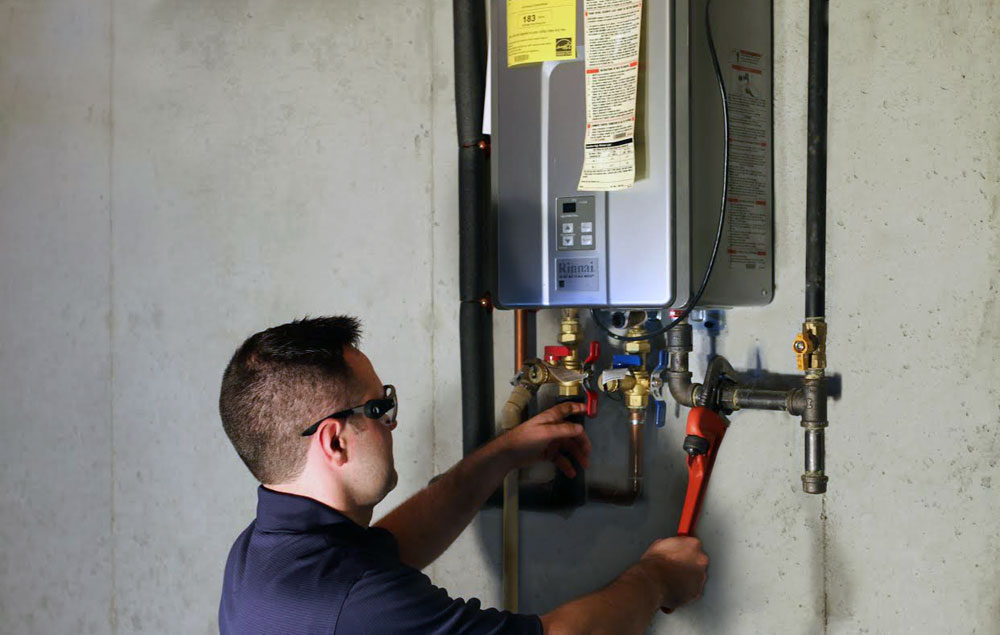
1. Use the venting system approved for the exact model
Venting requirements vary by appliance design. Some gas tankless water heaters require corrosion-resistant metal venting, while certain condensing models are approved for specified plastic vent materials, such as PVC, CPVC, or polypropylene. These materials are not interchangeable at the homeowner’s discretion.
Follow the manufacturer’s installation manual for the permitted vent type, diameter, total equivalent length, elbows, connections, and termination components. Do not assume that the vent from an old water heater can be reused.
ENERGY STAR explains that condensing gas tankless water heaters recover additional heat from combustion gases and require appropriate venting and condensate management.
2. Plan the vent route and termination location
The installer must identify a compliant route from the appliance to an approved termination point. Depending on the model and local rules, the vent may exit through a sidewall or roof.
Clearance requirements can apply around windows, doors, air intakes, walkways, property lines, and other building openings. The exact clearances depend on the appliance instructions and applicable code.
The shortest possible route is not automatically the correct route. The installer must also respect maximum vent length, slope where required, support spacing, and termination clearances.
3. Provide the correct combustion air arrangement
Many gas tankless units use sealed combustion or direct venting, drawing combustion air from outdoors and exhausting combustion products outside. Other designs have different air-supply requirements.
Do not assume a closet, basement, or utility room provides sufficient combustion air. The installation must follow the appliance’s instructions and local code requirements.
4. Understand condensing and non-condensing venting
Condensing and non-condensing gas tankless models may require different vent materials and installation details.
| Feature | Condensing Gas Tankless | Non-Condensing Gas Tankless |
|---|---|---|
| Heat recovery | Uses additional heat from combustion exhaust | Does not use the same secondary heat-recovery process |
| Venting materials | May allow specified PVC, CPVC, polypropylene, or other approved systems | Often requires a listed corrosion-resistant metal vent system |
| Condensate | Combustion condensate must be handled as specified by the manufacturer | Condensate management depends on the appliance and vent design |
| Installation requirements | Model-specific venting, drainage, and termination requirements | Model-specific venting, clearances, and termination requirements |
This table describes common differences, not universal specifications. Confirm the permitted materials and design for the exact model.
Read the official ENERGY STAR explanation of how gas tankless water heaters work for more background.
Gas Line Requirements for a Tankless Water Heater
A gas tankless water heater may require a substantially different gas supply arrangement from a conventional tank water heater. The burner can have a high input rating, so the existing gas piping must be checked before installation.
1. Check the gas line capacity
The installer must determine whether the existing piping can deliver the required gas volume at the pressure specified by the manufacturer while accounting for other gas appliances that may operate at the same time.
The calculation depends on factors such as:
- The tankless water heater’s rated gas input.
- Natural gas versus propane.
- Gas-line material, diameter, and total length.
- The number and input ratings of other gas appliances.
- Available gas pressure and pressure loss across the piping system.
- Applicable gas codes and manufacturer specifications.
A line that supplied an older tank water heater may not be adequate for a higher-input tankless unit. A qualified gas fitter or plumber should perform the required assessment rather than relying on visual inspection alone.
2. A gas line upgrade may be necessary
If the existing gas piping is undersized, the installer may need to replace or upgrade part of the line. This can increase the installation cost, especially if the new route is long or difficult to access.
Do not assume a specific pipe diameter will work for every installation. Gas-line sizing must be calculated for the actual appliance, gas type, pipe length, system pressure, and connected load.
3. Confirm gas pressure and required fittings
The installer should verify that gas pressure at the appliance remains within the manufacturer’s permitted range during operation. The correct shutoff valve, fittings, connectors, and pressure-testing procedure must be used in accordance with the installation manual and local code.
Never modify gas piping, adjust regulators, or test a gas connection with an open flame. If you smell gas, leave the area, avoid operating switches or creating sparks, and contact the gas utility or emergency service from a safe location.
For a broader comparison of fuel types, see Gas vs. Electric Water Heater: Costs, Efficiency and Best Use Cases.
Electrical Requirements for Gas Tankless Water Heaters
A gas tankless water heater still needs electricity if it uses electronic ignition, a control board, sensors, or a powered combustion fan. Many whole-home models do, although the exact requirements vary by product.
Before installation, the electrician or installer should check:
- Whether the unit requires a standard receptacle or hardwired connection.
- The required voltage and circuit protection.
- Whether the outlet or electrical connection is properly located and grounded.
- Whether the installation must comply with specific requirements for a wet or utility area.
- Whether any local electrical permits or inspections are required.
Do not assume every gas tankless model uses the same plug, circuit, or electrical arrangement. Follow the installation manual.
What happens if the power goes out?
Many gas tankless water heaters cannot operate during a power outage because their ignition, controls, or fan need electricity. The fact that gas is available does not necessarily mean the appliance will continue heating water without power.
If backup hot water is important, ask the installer whether the selected model supports an approved backup-power solution and what that setup would require. Never connect a generator or backup supply in a way that violates electrical safety requirements.
Electric Tankless Water Heater Installation Requirements
Electric tankless water heaters do not burn fuel and therefore do not need a combustion exhaust vent. However, whole-home electric models can require substantial electrical power, particularly when they must heat cold incoming water at a high flow rate.
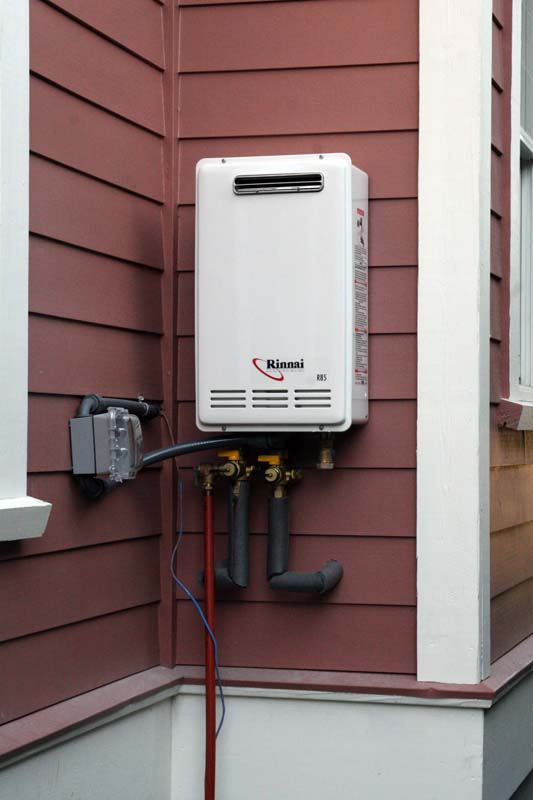
1. Confirm available electrical capacity
The installer or electrician must calculate whether the home’s electrical service and panel can support the selected unit. This assessment includes the appliance’s voltage, current draw, required circuits, breakers, conductor sizes, and any relevant local code requirements.
Some electric tankless systems require multiple dedicated circuits. A panel that already serves an electric range, clothes dryer, heat pump, or other high-demand equipment may need a detailed load calculation before a new unit can be approved.
2. Panel upgrades may increase the project cost
If the existing service or panel lacks sufficient capacity, electrical upgrades may be needed. In some homes, the cost of these upgrades can make a whole-home electric tankless system less attractive than a gas unit or another water-heating option.
Ask for an electrical assessment before purchasing the appliance. Do not assume that a compact wall-mounted unit can be installed without changes to the electrical system.
3. Size the unit for your required temperature rise
Electric tankless performance depends on the unit’s available heating power, incoming water temperature, and desired hot water flow. A model that supplies enough water in a warm climate may not deliver the same flow in winter when the incoming water is colder.
Calculate the household’s peak demand and required temperature rise, then compare the result with the manufacturer’s performance data.
Read our guide: What Size Tankless Water Heater Do You Need? GPM and Temperature Rise Explained.
Water Lines, Shutoff Valves and Plumbing Requirements
Both gas and electric tankless water heaters need correctly sized water connections. The installer must verify water pressure, pipe sizing, flow requirements, and compatibility with the selected model.
1. Check the cold and hot water connections
The existing pipes may be reusable, but their condition and size should be assessed. Leaks, corrosion, scale, poor water quality, or unsuitable piping can affect reliability and performance.
2. Install the required isolation and service valves
Many tankless manufacturers recommend or require service valves that allow the heat exchanger to be isolated for maintenance. Follow the exact model’s instructions for valve kits, shutoff arrangements, and service access.
3. Consider water hardness and scale prevention
Mineral scale can accumulate inside the heat exchanger, particularly in areas with hard water. Depending on local water conditions and manufacturer guidance, treatment or periodic descaling may be necessary.
Ask the installer whether your water quality calls for filtration, conditioning, or a specific maintenance schedule. Any treatment system must be compatible with the appliance and local requirements.
4. Check the hot water delivery layout
A tankless heater does not eliminate the time it takes hot water to travel through long pipes. If the unit is far from a bathroom or kitchen, you may still experience a delay before hot water arrives.
Recirculation systems or point-of-use solutions may reduce waiting time in some homes, but they must be compatible with the water heater and designed correctly. Ask about the effect on energy use, water consumption, and installation cost.
Condensate Drainage for Condensing Tankless Water Heaters
High-efficiency condensing gas tankless water heaters extract additional heat from combustion gases. This process produces condensate that must be collected and drained as specified by the manufacturer.
Before installation, confirm that:
- An approved drain route is available.
- The drain materials are compatible with the condensate and the appliance instructions.
- Any required neutralizer is installed and maintained as specified.
- A condensate pump is provided if gravity drainage is not practical and the manufacturer permits that arrangement.
- Drain lines are protected against freezing where necessary.
Not every model uses the same condensate arrangement. Follow the manufacturer’s requirements and applicable plumbing rules rather than improvising a drain connection.
Where Can You Install a Tankless Water Heater?
Tankless water heaters are compact, but the installation location still matters. The selected site must meet the manufacturer’s requirements for clearances, service access, environmental conditions, water connections, and fuel or electrical supply.
| Location | What to Check |
|---|---|
| Basement or utility room | Venting route for gas models, service access, drainage, and combustion air where required |
| Garage | Approved operating temperatures, protection from impact, freeze risks, and vent termination clearances |
| Exterior wall | Whether the exact model is rated for outdoor installation and can be protected from freezing |
| Small closet | Required clearances, access for maintenance, combustion air, and approved venting |
| Near a bathroom or kitchen | Water pipe routing, electrical or gas access, and the effect of distance on hot water delivery time |
Some tankless models are designed for outdoor installation, while others are intended only for indoor use. Never install an indoor-only model outside or expose equipment to temperatures beyond its approved limits.
For additional information about water-heating options and installation planning, read How to Choose a Water Heater: The Complete 2026 Buyer’s Guide.
Permits, Inspections and Local Building Codes
Depending on your location and the scope of the project, installing or replacing a tankless water heater may require plumbing, gas, mechanical, electrical, or building permits. Inspection requirements also vary by jurisdiction.
Before work begins, confirm:
- Which permits apply to the installation.
- Whether gas piping or electrical service changes require separate permits.
- Which venting, combustion air, and termination rules apply.
- Whether the appliance must meet local plumbing and energy codes.
- Whether the installer will arrange required inspections.
ENERGY STAR recommends checking local residential building codes and confirming whether the contractor will obtain any required permits. Requirements differ by jurisdiction, so there is no single checklist that applies everywhere.
How Much Does Tankless Water Heater Installation Cost?
The total installed price depends on the model, fuel type, local labor costs, and how much work is needed to adapt the home. A straightforward replacement may cost considerably less than a conversion that requires new gas piping, venting, electrical service, or drainage.
For early budgeting in the United States, homeowners may encounter broad installed-price estimates in the low thousands, with complex projects costing substantially more. Treat online ranges as planning estimates rather than quotes for your home.
| Installation Factor | Why It Affects Cost |
|---|---|
| Water heater model | Capacity, efficiency, features, and fuel type affect equipment price |
| Gas line upgrade | Additional piping, fittings, labor, and testing may be required |
| Venting | New approved vent materials, routing, and termination work add cost |
| Electrical work | New circuits, wiring, or panel upgrades may be necessary |
| Condensate drainage | Drain installation, a pump, or neutralization may be needed |
| Permits and inspections | Fees and compliance work vary by location |
| Water and vent pipe modifications | Existing layouts may need to be altered to suit the new appliance |
How to compare installation quotes
Request an itemized quote that includes the appliance, labor, venting, gas or electrical work, water connections, condensate management, permits, commissioning, and removal of the old unit.
Ask whether the contractor has included potential upgrades after inspecting your home’s existing services. A low initial quote may not include work that becomes necessary once the installation is assessed.
To compare long-term costs as well as installation expenses, read Is a Tankless Water Heater Worth It? Payback Time Explained and How Much Does It Cost to Run a Water Heater Per Month?.
Common Tankless Water Heater Installation Mistakes
1. Reusing an incompatible vent
A vent designed for another appliance may not be suitable for a tankless model. Use only the venting system approved for the exact unit.
2. Assuming the existing gas line is large enough
The new unit may have a much higher gas input than the old tank heater. Have the complete gas supply system evaluated before installation.
3. Ignoring electrical requirements
Gas models may still need electricity, while electric tankless models can require major electrical capacity. Verify the exact requirements before buying.
4. Choosing a model without checking hot water demand
A tankless unit must supply the required flow rate at the expected temperature rise. An undersized model may struggle when multiple fixtures run simultaneously.
5. Forgetting condensate drainage
Condensing gas models require appropriate condensate management. Failing to plan for drainage can delay installation or cause water damage.
6. Overlooking permits and inspections
Unpermitted work can create compliance, insurance, safety, and resale problems. Confirm local requirements before the work begins.
7. Choosing a location without service access
The unit needs the clearances specified by the manufacturer for installation, maintenance, and repair. A compact footprint does not mean it can be placed anywhere.
Tankless Water Heater Installation Checklist
Use this checklist when comparing installers or preparing for an installation.
- Confirm the household’s peak hot water demand and required temperature rise.
- Verify the exact model’s installation manual and approved location.
- For gas models, check gas type, supply capacity, pressure, and piping.
- For gas models, confirm approved vent materials, route, and termination clearances.
- For electric models, confirm service capacity, circuit requirements, and panel compatibility.
- Check the electrical supply required by gas models with electronic controls.
- Plan the hot and cold water connections and service valves.
- Provide condensate drainage for models that require it.
- Check water quality and any maintenance or scale-control requirements.
- Confirm permits, inspections, and local code requirements.
- Get a written, itemized quote that includes any necessary upgrades.
- Ensure the installer commissions the appliance and explains maintenance requirements.
Frequently Asked Questions
Does a gas tankless water heater need electricity?
Many gas tankless models need electricity for ignition, electronic controls, sensors, or a combustion fan. Requirements vary by model, so check the installation manual and ask what happens during a power outage.
Does an electric tankless water heater need venting?
Electric tankless water heaters do not require combustion exhaust venting because they do not burn gas. They still need compliant electrical installation, plumbing connections, and any clearances specified by the manufacturer.
Can I use my existing gas line for a tankless water heater?
Possibly, but it must be assessed for the new appliance’s gas input, gas type, available pressure, piping size, length, and other connected appliances. A gas line that served a tank water heater may not have sufficient capacity.
Can I reuse the vent from my old water heater?
Do not assume that you can. Tankless models may require different vent materials, diameters, lengths, and termination clearances. The installer must verify whether any existing vent components are specifically approved for the new model.
Does an electric tankless water heater require a panel upgrade?
Not always. It depends on the unit’s electrical demand and your home’s available service capacity. A qualified electrician should complete the necessary load assessment before you purchase the heater.
Do I need a permit to install a tankless water heater?
Permit requirements vary by city, county, and jurisdiction. Gas piping, electrical changes, venting, or plumbing work may trigger separate requirements. Check with your local building department and confirm who will arrange inspections.
Does every tankless water heater need a condensate drain?
No. Condensate drainage is particularly important for condensing gas models, which produce condensate during operation. Requirements depend on the model and its installation design.
Is installing a tankless water heater more expensive than replacing a tank?
It can be, especially when new venting, gas piping, electrical circuits, condensate drainage, or permits are required. The difference depends on the home’s existing services and the chosen model. Compare itemized installation quotes rather than equipment prices alone.
Final Verdict: Plan the Installation Before Buying
A tankless water heater can be an excellent choice, but its success depends on more than the unit itself. The gas supply, venting system, electrical service, plumbing connections, drainage, and installation location must all match the manufacturer’s specifications.
Gas models require special attention to gas-line capacity and safe combustion exhaust. Electric models require careful electrical load planning. Both need proper sizing, approved installation practices, and compliance with local requirements.
Before making a purchase, arrange an on-site assessment and request a written quote that identifies all necessary upgrades. Planning these details in advance can help prevent unexpected costs and ensure that the system delivers reliable hot water.
Continue exploring our tankless and heat pump guides:
- What Size Tankless Water Heater Do You Need? GPM and Temperature Rise Explained
- Heat Pump Water Heater vs. Tankless: Which Saves More Money?
- Is a Tankless Water Heater Worth It? Payback Time Explained
- Tank vs. Tankless Water Heater: Which One Should You Buy?
- Gas vs. Electric Water Heater: Costs, Efficiency and Best Use Cases
Sources and Further Reading
- ENERGY STAR: Whole-Home Gas Tankless Water Heaters — consumer guidance on sizing, gas supply, venting, electrical availability, and choosing an installer.
- ENERGY STAR: How Gas Tankless Water Heaters Work — overview of combustion exhaust and condensing technology.
- U.S. Department of Energy: Measure Guideline for Transitioning to a Tankless Water Heater — technical guidance on gas supply, electrical service, venting, and installation planning.
- Building America Solution Center: Gas Tankless Water Heater Checklist — installation quality and contractor inspection guidance.
Disclaimer: This article is for general educational purposes only and is not a substitute for professional gas, plumbing, electrical, or building-code advice. Installation requirements vary by appliance, jurisdiction, fuel type, and property. Always follow the exact manufacturer’s installation manual and have qualified professionals perform or inspect work as required by local law.